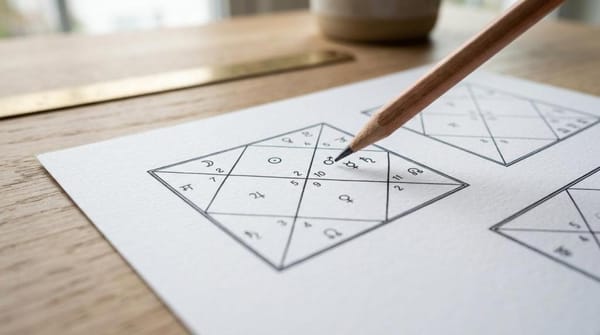
Vedic Astrology vs Western Astrology

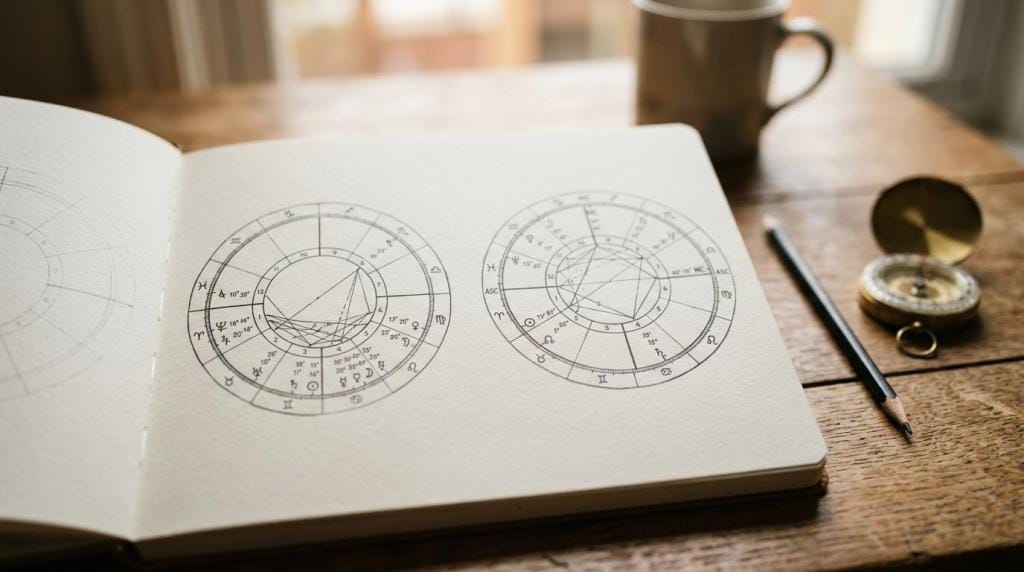
Explore vedic astrology vs Western astrology: zodiac, signs, houses, dashas, and why your chart can look completely different.
Many people first meet astrology through a Western Sun sign. You hear “I’m a Leo” or “I’m a Capricorn,” and that becomes the whole story. Then you look at a Vedic chart and suddenly the sign changes, the house layout looks different, and new terms like Lagna, Nakshatra, Rahu, and Dasha appear.
That can feel confusing at first, but it is actually a good sign: it means you are seeing two different astrological systems, not a mistake.
Both traditions aim to read patterns in time and personality. They just do it through different frameworks, different priorities, and different philosophical lenses. If you have ever wondered why your Western chart says one thing and your Kundli says another, the answer starts with the zodiac itself.
The Core Zodiac Difference Between Vedic Astrology and Western Astrology
The biggest technical split between these systems is the zodiac they use.
Vedic astrology, or Jyotish, uses the sidereal zodiac. This zodiac is tied to the fixed stars. Western astrology usually uses the tropical zodiac, which begins Aries at the spring equinox and links the zodiac to the seasons.
Because Earth’s axis slowly shifts over long periods, these two zodiacs no longer line up. That gap is why a person’s sign placements often shift when moving from Western astrology to Vedic astrology. A Western Aries Sun may become a Vedic Pisces Sun. A Western Gemini Moon may become a Vedic Taurus Moon.
This is why comparing charts is not just about swapping labels. The whole chart can change.
| Aspect | Vedic Astrology | Western Astrology |
|---|---|---|
| Zodiac | Sidereal, star-based | Tropical, season-based |
| Main identity focus | Moon sign and Ascendant often carry major weight | Sun sign is often the starting point |
| House style | Usually whole-sign houses | Often Placidus or other quadrant systems |
| Extra chart detail | Nakshatras, divisional charts, dashas | Transits, progressions, returns |
| Key non-physical points | Rahu and Ketu are central | Lunar nodes matter, outer planets also matter |
Ayanamsha is the correction used in Vedic astrology to account for the difference between tropical and sidereal positions. That one adjustment affects every planet, the Ascendant, and the Moon.
How Houses, Planets, and Nakshatras Change the Chart
The zodiac difference is only the start. Chart structure changes too.
Vedic astrology usually uses whole-sign houses. If Cancer is rising, then all of Cancer becomes the 1st house, Leo becomes the 2nd, Virgo becomes the 3rd, and so on. Western astrology often uses house systems that divide the sky by time and space, which can create uneven houses and intercepted signs.
The set of planets emphasized can also differ. Traditional Vedic astrology focuses on the seven classical planets plus Rahu and Ketu, the lunar nodes. Western astrology often includes Uranus, Neptune, and Pluto as core influences. That means the symbolic language can feel different even when both systems are looking at the same life.
Vedic astrology also adds a layer that many Western beginners have never seen: Nakshatras, the 27 lunar mansions. These give a more refined reading of the Moon and often shape personality, timing, and compatibility analysis in a very specific way.
When people say Vedic astrology feels more detailed, they are often reacting to features like these:
- Whole-sign houses
- Rahu and Ketu
- Nakshatras
- Divisional charts
- Dasha timelines
That does not make Western astrology shallow. It simply means the two systems zoom in on different parts of the chart.
Why Your Sign Often Changes in Vedic Astrology
This is one of the most common surprises.
Most people who know their chart casually know their Western Sun sign. Since the tropical zodiac currently sits about 24 degrees ahead of the sidereal zodiac, many Vedic placements move back by roughly one sign. Not always, but often.
So if you have spent years relating to a Western Sun sign and then see a different Vedic Sun sign, there is no need to panic or feel like one of them must be false. They are built from different sky maps.
There is another important point here: Vedic astrology usually puts more emphasis on the Moon sign and the Ascendant than casual Western astrology does. So even if your Sun sign changes, the deeper Vedic reading may still resonate because the chart is not centered on the Sun alone.
For many people, this shift is actually helpful. It moves the conversation away from one label and toward a fuller picture of mind, behavior, timing, relationships, and life direction.
Prediction Methods: Dashas in Vedic Astrology and Transits in Western Astrology
If you ask, “What is likely to happen next?” the two traditions answer in different ways.
Vedic astrology is known for Dasha systems, especially Vimshottari Dasha. A dasha is a planetary time period. It marks which planet is active in a certain chapter of life and helps astrologers judge when themes around career, relationships, money, family, or inner change may come forward more strongly.
Western astrology usually relies more on transits, progressions, and returns. A Western astrologer may look at Saturn crossing the natal Moon, Jupiter moving through the 10th house, or a Saturn return around age 29. These methods are rich and useful, but the timing style feels different from a dasha-based reading.
A simple way to think about it is this: Vedic astrology often asks, “Which planet’s period are you living through?” Western astrology often asks, “What is happening in the sky right now in relation to your birth chart?”
That difference shapes the tone of the reading.
Vedic timing can feel structured, almost like chapters in a book. Western timing can feel more fluid, with changing waves of pressure, growth, opportunity, and reflection moving through the chart over time.
Philosophy: Karma, Free Will, and Personal Growth in Astrology
The difference is not only technical. It is also philosophical.
Vedic astrology is deeply connected with ideas of karma, dharma, and the timing of life events. The chart is often read as a map of tendencies, responsibilities, and lessons carried into this lifetime. That is why Vedic readings may focus on purpose, duty, family patterns, spiritual growth, and practical timing.
Western astrology, especially in its modern form, often leans more toward psychology. It may focus on identity, emotional patterns, attachment styles, creativity, shadow work, and conscious choice. The question is often less “What is fated?” and more “How can I work with this energy well?”
Neither lens has to be fear-based.
A healthy Vedic reading should not tell you that you are stuck. It should help you see your strengths, your timing, and the areas where wise action matters most. A healthy Western reading should not stay vague or overly abstract. It should help you turn self-awareness into real choices.
That balance matters. Astrology is most useful when it gives clarity without taking away your agency.
Historical Roots of Vedic Astrology and Western Astrology
These systems grew from different cultural streams, which helps explain why they feel so distinct.
Vedic astrology developed in the Indian tradition and became closely linked with ritual timing, lunar cycles, karma, and sacred cosmology. Over time, classical texts shaped the methods that many astrologers still use today, including sign rulerships, houses, yogas, dashas, and divisional charts.
Western astrology traces back through Babylonian, Hellenistic, Roman, medieval, and later European traditions. Its modern form also carries a strong psychological influence, especially from the last century, where astrology became a tool for self-reflection as much as prediction.
There was also exchange between these traditions. Indian astrology absorbed parts of Hellenistic astrology long ago, including zodiacal and house-based methods. So this is not a story of two systems with no contact at all. It is better to think of them as related branches that grew in different directions.
That shared history is one reason some people find value in reading both charts side by side.
How to Choose Between Vedic Astrology and Western Astrology
The best system often depends on the question you are asking.
If you want marriage timing, dasha periods, Muhurat, compatibility, or a classic Kundli reading, Vedic astrology will usually feel more natural. If you want a familiar personality-based chart, strong Sun sign culture, and a psychology-centered reading, Western astrology may feel easier to enter.
Here is a simple way to choose your starting point:
- Choose Vedic astrology if: you want a Kundli, Moon sign insight, Nakshatra detail, life-period timing, or traditional compatibility analysis.
- Choose Western astrology if: you want a tropical birth chart, strong focus on the Sun sign, psychological framing, or transit-based forecasting.
- Use both if: you like comparing lenses and want one chart for inner reflection and another for timing and life structure.
Many people do not need to “pick a side” forever. They just need a clear reason for the chart they are using.
If your family speaks in terms of Rashi, Lagna, Dasha, or Muhurat, Vedic astrology will likely answer your questions more directly. If you came in through modern horoscope culture and want to reflect on identity and relationships, Western astrology may feel more familiar at first.
A Simple Way to Compare Your Vedic Chart and Western Chart
If you want to compare both systems without getting lost, keep it practical.
Start with the same birth data for both charts: date, exact time, and place. Then compare your Ascendant, Moon, Sun, 7th house themes, 10th house themes, and current timing methods. Do not try to judge the whole chart in one sitting. Pick a few life areas and see which system speaks to them more clearly.
A good comparison usually looks like this:
- Check your Western Sun, Moon, and Rising.
- Check your Vedic Lagna, Moon sign, and Nakshatra.
- Compare the 7th house for relationships and the 10th house for career.
- Look at current transits in Western astrology and current dasha in Vedic astrology.
- Notice which framework gives you clearer, more useful guidance.
This process often shows something interesting: the two systems may sound different on the surface, yet both can point to similar life themes through different language.
That is where astrology becomes genuinely useful. Not as a contest, but as a tool for pattern recognition, timing, and self-honesty.
If you are mainly looking for a Vedic reading, it helps to use a chart that includes the pieces Vedic astrologers actually rely on: sidereal placements, Moon sign, Nakshatra, dashas, and whole-sign houses. Without those, the picture will feel incomplete. And if you are comparing both traditions, give each one room to speak in its own language rather than forcing them to behave the same way.