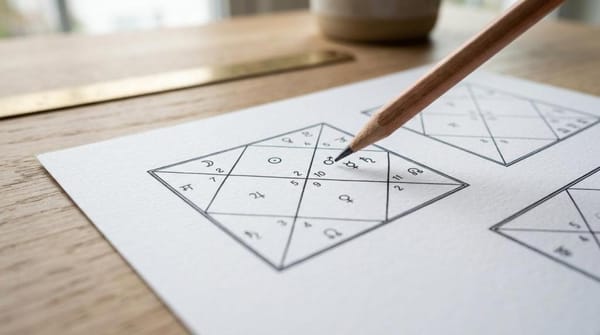
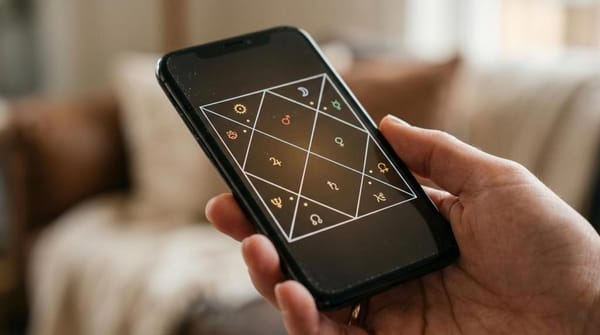
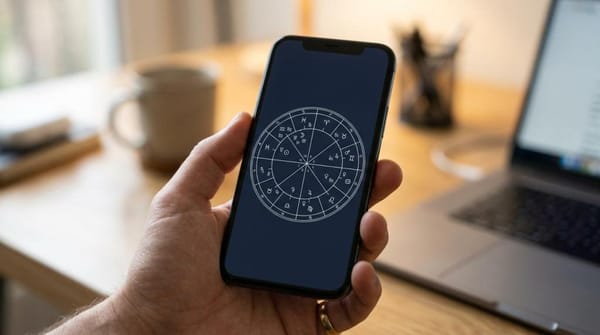
Moon Sign vs Sun Sign Explained

Learn how sun sign and Moon sign differ in astrology, from core identity to emotions, timing, and why Vedic readings favor the Moon for daily life.
Most people first meet astrology through a Sun sign horoscope. You are told your birth date, then handed a sign and a personality sketch. That is simple, memorable, and often useful as a starting point.
But Sun sign astrology and Moon sign astrology are not talking about the same layer of a chart. In Vedic astrology, the Moon sign often carries more weight for daily life, emotional patterns, nakshatra-based timing, and many transit readings. The Sun sign still matters. It just answers a different question.
A clean way to frame it is this: the Sun sign shows your core vitality and self-expression, while the Moon sign shows your mind, feelings, habits, and inner responses. Add the Ascendant, or Lagna, and you have the three most common identity anchors in a Kundli.
Sun sign meaning in astrology
A Sun sign is the zodiac sign occupied by the Sun at the moment of birth. In astrology, it points to identity, life force, confidence, and the way a person expresses purpose.
That is why Sun sign descriptions often sound like broad personality portraits. The Sun changes signs slowly, about once a month, so many people born in the same date range share the same Sun sign. In popular Western astrology, this is the sign you see in magazine horoscopes.
In Jyotish, the Sun is one of the nine grahas and is linked with vitality, authority, self-respect, father figures, and the sense of inner light. Classical texts like Brihat Parashara Hora Shastra and Phaladeepika treat the Sun and Moon as separate significators, or karakas, with different roles. The sign matters, but so do the house placement, aspects, conjunctions, dignity, and dasha periods.
A Sun in Leo in the 1st house reads very differently from a Sun in Leo in the 12th house.
Moon sign meaning in Vedic astrology
A Moon sign is the zodiac sign occupied by the Moon at the moment of birth. In Vedic astrology, it is closely tied to the mind, emotional rhythm, memory, habits, and how a person experiences life from the inside.
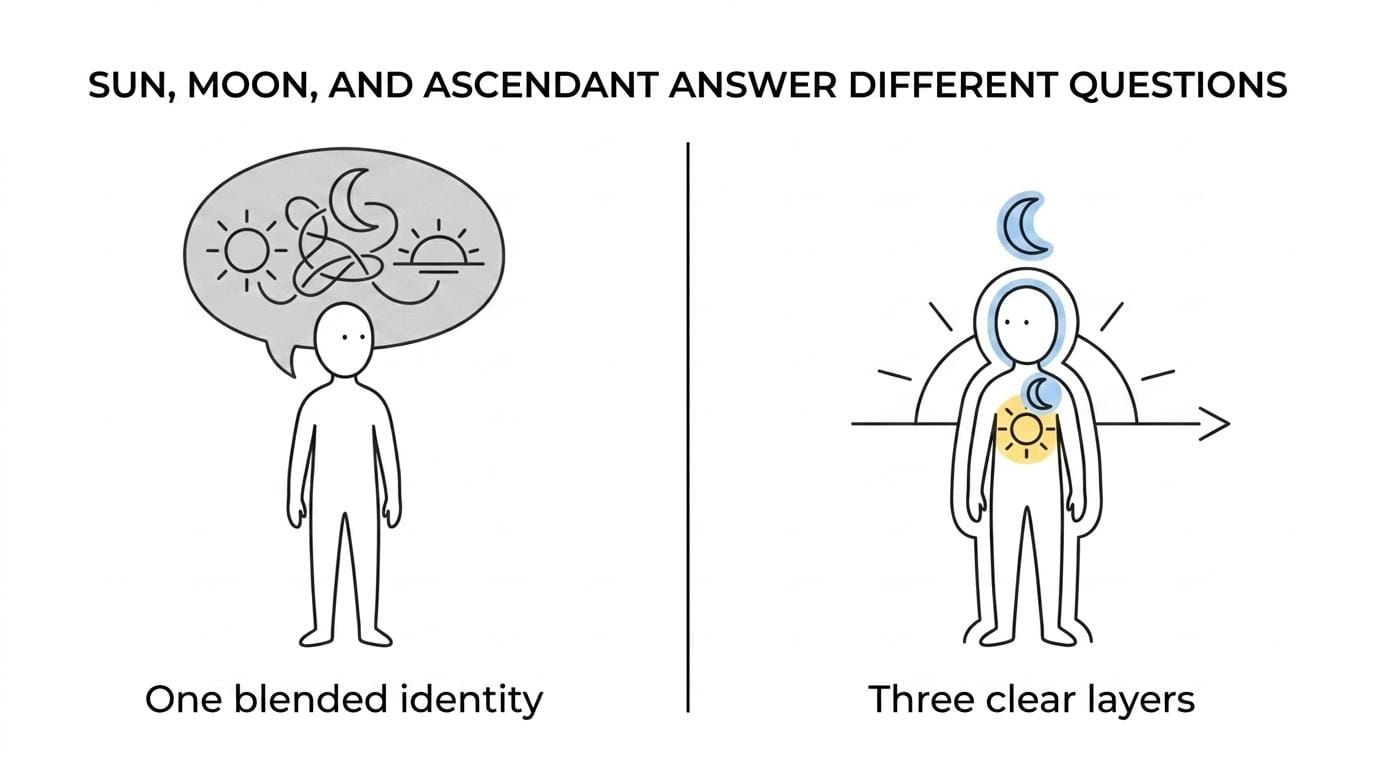
Side-by-side comparison of Sun sign, Moon sign, and Ascendant showing core vitality, inner emotions, and outward life direction.
The Moon moves much faster than the Sun and changes sign roughly every 2.25 days. That makes the Moon sign more sensitive to exact birth time. It also makes it a strong anchor for short-term timing, daily horoscopes, and transit-based readings.
In Jyotish practice, the Moon sign has extra importance because the birth nakshatra is calculated from the Moon’s position. That nakshatra is used in systems like Vimshottari Dasha, and it is also central in many matching methods, Muhurat work, and mental-emotional interpretation.
They answer different questions.
After you know both signs, a simple comparison helps:
- Sun sign: core vitality, pride, will, purpose
- Moon sign: feelings, instincts, comfort patterns, memory
- Ascendant: outward style, body, life direction, house structure
Sun sign vs Moon sign calculation
Sun sign and Moon sign are both astronomical positions mapped onto the zodiac. The difference is not only symbolic. It is also mathematical.
A basic Sun sign in pop astrology is often assigned from birth date alone. That shortcut works only inside a fixed zodiac system with standard date ranges. An accurate Moon sign needs birth date, exact birth time, and birthplace because the Moon moves quickly. In Vedic astrology, even the Sun sign is best calculated from full birth details, because the zodiac used is usually sidereal, not tropical.
Here is the practical difference:
Feature | Sun sign | Moon sign | Why it matters |
|---|---|---|---|
Planet used | Sun | Moon | Different psychological focus |
Speed of movement | About 1 sign per month | About 1 sign every 2.25 days | Moon sign changes much faster |
Birth time sensitivity | Moderate near sign boundaries | High | Wrong time can change Moon sign |
Common use | Identity, self-expression | Mind, emotions, daily horoscope | Different reading logic |
Vedic importance | Important, but not usually the first daily reference | Very high | Used for nakshatra and transit reading |
Method note: Sidereal Vedic calculations depend on the ayanamsha used. StarYaar states that its tools use Swiss Ephemeris with Lahiri Ayanamsa for sidereal calculations. That differs from the tropical zodiac commonly used in Western Sun sign astrology.
From a scientific point of view, astrology is generally classified as pseudoscience. Inside astrology, though, better calculations still matter. If the zodiac reference system, ephemeris, or birth time is off, the chart logic changes.
Tropical zodiac and sidereal zodiac differences
The tropical zodiac is a zodiac tied to the equinoxes and seasonal points. The sidereal zodiac is tied to the fixed stars. That one distinction explains why a Western Sun sign and a Vedic sign may not match.
Because of the precession of the equinoxes, the Earth’s axis slowly shifts over a cycle of roughly 26,000 years. As a result, tropical zodiac sign dates no longer match the current astronomical constellations in the sky. Encyclopedic astronomy sources commonly note this mismatch. Astrology did not “get it wrong” in a simple sense. It kept using a different frame of reference.
That is why someone called Aries in a tropical horoscope might appear as Pisces in a sidereal Kundli. The gap is now close to 24 degrees, though the exact difference depends on the ayanamsha used in sidereal systems.
A quick comparison makes this easier:
- Tropical zodiac
- Sidereal zodiac
- Precession shift
- Different sign dates for the same birth date
Why Moon sign matters more in Vedic astrology
In Vedic astrology, the Moon sign is often treated as the main lens for daily experience. The short reason is that the Moon signifies manas, the mind, and many predictive techniques are built around the Moon.
This is why Janma Rashi, or birth Moon sign, is widely used for daily horoscopes. It is also why major transit patterns are often read from the Moon sign. Saturn’s Sade Sati, for example, is judged from Saturn transiting the 12th, 1st, and 2nd signs from the natal Moon. Jupiter transits are also commonly read from the Moon sign, even while serious chart analysis checks the Ascendant, house lords, and running dasha.
The Moon sign also determines the birth nakshatra. That matters a lot because Vimshottari Dasha begins from the nakshatra occupied by the Moon at birth. So the Moon is not only emotional symbolism. It is a timing anchor.
A few direct links make this clear:
- Daily horoscope: usually read from the Moon sign in Vedic practice
- Birth nakshatra: derived from the Moon’s exact position
- Vimshottari Dasha: starts from the Moon nakshatra balance at birth
- Transit reading: Saturn, Jupiter, Rahu, and Ketu are often judged from both Moon sign and Ascendant
This is also where houses become important. A Moon in the 4th house behaves differently from a Moon in the 11th house. A Moon in Ashlesha nakshatra is interpreted differently from a Moon in Rohini, even if both are “Moon-driven” personalities in a broad sense.
Example chart reading using Sun sign, Moon sign, and Ascendant
A chart is never just one sign. A usable reading needs planets, houses, nakshatras, yogas, and dashas working together.
Take a simple example: Virgo Ascendant, Taurus Sun in the 9th house, and Cancer Moon in the 11th house in Pushya nakshatra. The Taurus Sun may show steady values, patience, and a need for stable purpose. Because it sits in the 9th house, that purpose may express through learning, mentors, belief systems, long-distance travel, or teaching.
The Cancer Moon changes the feel of the chart. It points to emotional sensitivity, protectiveness, and strong memory. In the 11th house, the person may seek emotional security through friends, communities, goals, and networks. Pushya nakshatra can add themes of nourishment, guidance, and duty.
Now add timing. During Moon Mahadasha, emotional life, friendships, gains, and inner security may come to the front. During Sun Mahadasha, 9th-house themes and questions of principle, confidence, father figures, or public purpose may become stronger. If Jupiter aspects the Moon, support and optimism may grow. If the Sun joins Mercury, readers may also check for Budha Aditya Yoga, which can shape speech, planning, and intellect.
This is why “I am a Taurus” is never the full answer.
Common misconceptions about Sun sign and Moon sign
A misconception is a simple rule that sounds neat but breaks down in real chart work. Sun sign and Moon sign discussions are full of these shortcuts.
The biggest mistake is treating one sign as “real” and the other as useless. In practice, both matter, and the Ascendant matters too. Jyotish is a system of relationships between grahas, rashis, houses, aspects, divisional charts, yogas, and dasha periods.
A few common myths show up again and again:
- The Moon sign replaces the Sun sign: it does not; it adds another layer
- Birth date is enough for every reading: not for accurate Moon sign, Ascendant, houses, or nakshatra
- People with the same Sun sign are basically the same: houses, aspects, yogas, dashas, and nakshatras change the result
- Newspaper horoscope shortcuts
Another useful correction: “Moon sign is more important in Vedic astrology” does not mean “Sun sign does not matter.” It means the Moon is often the first checkpoint for mental life, daily transits, and timing methods.
FAQ about Sun sign, Moon sign, and Ascendant
A FAQ section works best when each question has one clear answer first, then a little detail.
Can Sun sign and Moon sign be the same?
Yes. If the Sun and Moon were in the same zodiac sign at birth, you can have the same Sun sign and Moon sign. That often creates a more unified outer and inner style, though houses, nakshatras, and aspects still change how it plays out.
Which sign should I read for daily horoscope?
In popular Western astrology, daily horoscopes are usually written for the Sun sign. In Vedic astrology, daily readings are commonly based on the Moon sign, because transit effects are often judged from Janma Rashi. A careful astrologer may still cross-check the Ascendant.
Why is my Vedic sign different from my Western sign?
This usually happens because Western Sun sign astrology often uses the tropical zodiac, while Vedic astrology usually uses the sidereal zodiac. Precession creates a gap between those systems, so the same birth date can produce different sign placements.
Does the Ascendant matter more than both?
The Ascendant is often the main structural anchor of the chart because it sets the houses and house lords. The Moon sign is very important for mind, transits, and dasha-linked timing. The Sun sign is important for vitality, confidence, and purpose. Asking which is “more important” can miss the point. Each one describes a different layer.
How to calculate your signs accurately in a Kundli
Accurate sign calculation means using the right birth data and the right zodiac framework. If your goal is Vedic astrology, use a sidereal chart, note the ayanamsha, and check the Moon nakshatra along with the signs.
A practical method looks like this:
- Enter birth date, exact birth time, and birthplace.
- Generate a sidereal D1 chart using a stated ayanamsha, commonly Lahiri.
- Note the Ascendant, Sun sign, Moon sign, and Moon nakshatra.
- Read those placements with houses, planetary aspects, yogas, and the current dasha.
- Cross-check transits from both the Moon sign and the Ascendant.
If you want a chart that follows this method, StarYaar states that its Kundli tools use Swiss Ephemeris with Lahiri Ayanamsa and show sign placements, houses, nakshatras, dashas, yogas, and transits together. That kind of transparency matters because “your sign” is only meaningful when the calculation method is clear.