Kundli Matching, How Ashtakoot Works for Marriage

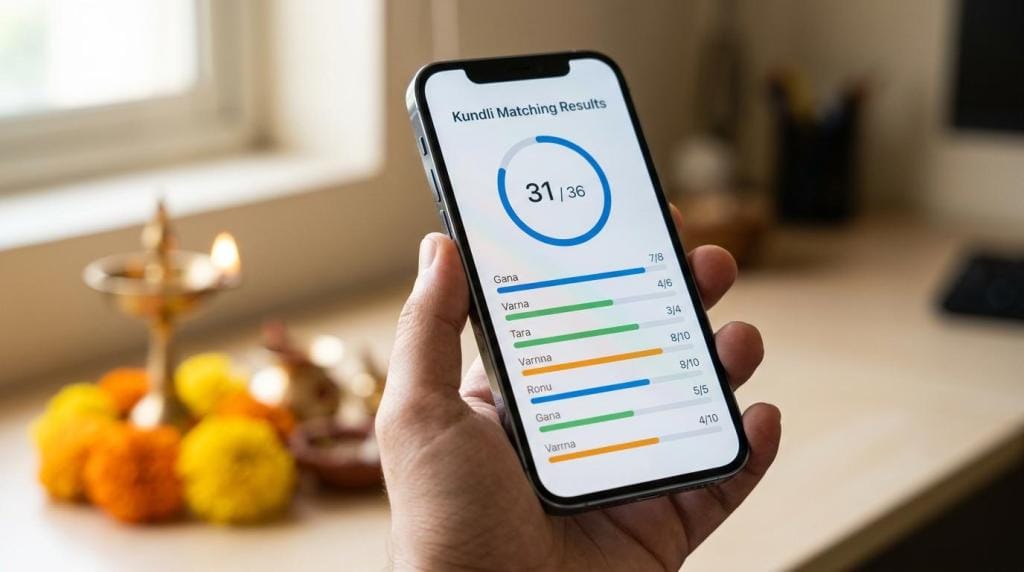
Kundli matching explains how Ashtakoot works, what 36 gunas mean, and why Nadi, Bhakoot, and Gana matter in marriage.
When people talk about marriage compatibility in Vedic astrology, one question comes up again and again: how many gunas matched? That question matters, but the real value of kundli matching is not just a number. It is a structured way to look at temperament, emotional connection, attraction, family life, health-related factors, and long-term harmony.
Ashtakoot is the best-known method used for this purpose in many parts of India. It gives a score out of 36, based mainly on the Moon sign and Nakshatra of both people. If you have ever seen a report with terms like Nadi Dosha, Bhakoot, or Graha Maitri and wondered what they actually mean, this breakdown makes the system much easier to read.
What kundli matching means in Vedic marriage matching
Kundli matching compares two birth charts before marriage to check compatibility from a Vedic astrology point of view. In common practice, the first layer is Ashtakoot Milan, also called Guna Milan. This system compares eight factors, or kootas, and adds up their points to a maximum of 36.
The idea is simple: married life is not based on one trait alone. A couple may get along emotionally but clash in habits. They may feel drawn to each other but struggle with family expectations. Ashtakoot tries to check several parts of married life instead of reducing everything to one single sign match.
In Vedic astrology, the Moon has special importance in relationship matching because it reflects the mind, emotional patterns, habits, and day-to-day comfort. That is why Moon sign and Nakshatra form the core of the Ashtakoot method.
How Ashtakoot matching works with 36 points
Each of the eight kootas has a set maximum score. Some carry only a little weight, while others carry much more. Nadi, for example, has 8 points, while Varna has only 1. That already tells you something useful: not all mismatches are treated equally in this system.
Here is the basic structure.
| Koota | What it measures | Max Points |
|---|---|---|
| Varna | Values, ego balance, mutual respect | 1 |
| Vashya | Attraction and influence in the relationship | 2 |
| Tara | Well-being and star-based harmony | 3 |
| Yoni | Physical and intimate compatibility | 4 |
| Graha Maitri | Mental and emotional rapport | 5 |
| Gana | Temperament and behavioral style | 6 |
| Bhakoot | Moon sign relationship, family and prosperity themes | 7 |
| Nadi | Health and genetic compatibility themes | 8 |
A final score is created by adding all eight results together. Many families treat 18 out of 36 as the minimum acceptable mark. Still, that does not mean 18 is automatically great, or that 17 always means no. The full pattern matters.
What each Ashtakoot koota measures in marriage compatibility
A good kundli matching report should never stop at the total score. The breakdown is where the meaning lives.
- Varna: basic value system, respect, and spiritual outlook
- Vashya: mutual pull, influence, and power balance
- Tara: star harmony linked with well-being and steadiness
- Yoni: attraction, intimacy, and comfort on a physical level
- Graha Maitri: emotional rapport and mental friendship
- Gana: natural temperament and how each person reacts under stress
- Bhakoot: family life, emotional flow, and practical stability
- Nadi: health-related compatibility themes and offspring-related concerns
Some of these are easier to feel in everyday life. Graha Maitri and Gana often show up in conversation style, emotional reactions, and how conflict plays out. Yoni speaks to chemistry and closeness. Bhakoot and Nadi are often treated more seriously because of the weight given to them in traditional matching.
This is one reason a plain “26/36 matched” summary can miss the point. A couple may have a decent total but still need close attention if the weak areas are concentrated in one of the heavier kootas.
How to read a kundli matching score without panic
People often hear score ranges in a very rigid way. In practice, they are better used as guidance.
| Score Range | Usual reading |
|---|---|
| 0 to 17 | Weak match |
| 18 to 24 | Average match |
| 25 to 32 | Good match |
| 33 to 36 | Very strong match |
A strong score can suggest ease in many areas. An average score may show that the match has both supportive and sensitive points. A low score can signal caution, but it still does not tell the whole story by itself.
There are a few reasons for that. First, some charts show cancellation of doshas or other supportive factors outside Ashtakoot. Second, marriage depends on much more than astrology alone. Consent, emotional maturity, communication, life goals, and family context matter deeply. Third, two people with awareness and effort can handle a lot more than a scorecard can show.
That is why an honest reading should be clear, not fear-based.
Why Nadi, Bhakoot, and Gana often get extra attention
Not every mismatch creates the same level of concern. In many traditional readings, these three areas tend to draw the most attention because they cover foundational parts of married life.
Nadi has the highest score weight at 8 points. A same-Nadi match is called Nadi Dosha and is often treated seriously, especially in traditional settings. Bhakoot follows with 7 points and is linked with emotional flow, prosperity, and family stability. Gana, with 6 points, is heavily tied to temperament.
That does not mean the other kootas are minor. It means the system itself gives more weight to these concerns. If a report shows a weak total because Varna scored low, that usually carries less concern than a weak total driven by Nadi or Bhakoot.
A useful way to think about it is this:
- low-weight mismatch
- medium-weight mismatch
- high-weight mismatch with possible cancellation
- high-weight mismatch needing full chart review
This is also why experienced readers look beyond “pass” and “fail.” The question is not only whether a dosha exists. The question is how strongly it appears, whether other chart factors soften it, and what the relationship pattern looks like as a whole.
Regional differences in kundli matching systems
Ashtakoot is widely used in North India, and it is the method most people mean when they say guna milan. In many South Indian traditions, though, marriage matching may follow a different structure, often called Dasa Porutham or similar systems depending on language and community.
In those systems, the focus may shift from a 36-point score to pass-or-fail checks on certain compatibility factors. Rajju, for example, is often treated with very high importance in South Indian matching.
Maharashtra and some other regions often use a mixed approach. Families may review the Ashtakoot score but still give special attention to specific doshas, local customs, or practical concerns raised by the full chart.
So if one astrologer says a match is acceptable and another sounds more cautious, the difference may come from method, tradition, or which factors they prioritize.
What a useful online kundli matching report should show
Online tools have made kundli matching much easier to access. That is a real benefit, especially for couples and families living in different cities or countries. A good digital report can calculate the score quickly, show the koota-by-koota result, and explain the meaning in simple language.
What matters most is clarity. The best reports do not turn astrology into a black box. They tell you what matched, what did not, and where a closer chart review may help.
A useful report should include:
- Total score: the final result out of 36
- Koota breakdown: points for each of the eight factors
- Dosha context: whether a concern is serious, mild, or possibly canceled
- Plain-language meaning: what the result may mean in actual married life
- Next step: whether the pair should review Manglik, Navamsa, dasha, or full-chart factors
This is where modern astrology tools can be genuinely helpful. When calculations are accurate and the explanation is human, people feel less confused and less pressured by random numbers. At StarYaar, that kind of plain-language approach matters because people do better with honest guidance than with scary labels.
Why Ashtakoot is helpful, but not enough by itself
A marriage match is bigger than one scoring system. Ashtakoot is useful because it gives structure. It helps families ask better questions. It can point to areas of comfort and areas that may need patience. But it is still one layer.
A deeper compatibility reading may also look at Manglik status, the 7th house, Venus and Jupiter, Navamsa, dasha timing, and the general strength of the relationship houses in both charts. Without that, a high guna score can look stronger than it really is, and a lower score can look worse than it really is.
This matters even more now because many couples are choosing their own partners and using astrology as guidance rather than a final authority. In that setting, kundli matching works best when it supports thoughtfulness, not fear.
It should never replace consent, respect, or common sense.
Questions to ask after you see a kundli matching score
The healthiest way to use a score is to treat it like the start of a conversation. Once you have the number, ask what it is really saying.
- Which kootas are strong?: This shows the natural strengths in the match.
- Which weak areas matter most?: A low Varna score and a low Nadi score are not the same thing.
- Is there any dosha cancellation?: Some concerns soften when the full chart is checked.
- What does this mean in real life?: Look for links to communication, family expectations, intimacy, stress, and health themes.
That shift in mindset changes everything. Instead of asking, “Is this match doomed?” a much better question is, “What are this couple’s strengths, and what should they handle with more care?”
That is a far better use of kundli matching, and it keeps the process grounded, respectful, and genuinely helpful.